















The publications groups from Francis Howell Central and Francis Howell High Schools requested individual responses from each FHSD Board of Education candidate by Wednesday, March 11, 2026. Below are their answers.
JASON ADAMS
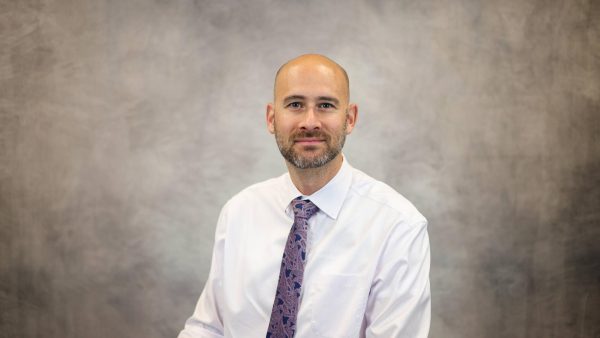
1: What encouraged you to run for the school board?
Since leaving FHSD, I had considered running for the school board at some point, but I hadn’t really thought about when that would be. Then a few days before filing opened, Dr. Pam Sloan, a previous FHSD superintendent whom I greatly respect, reached out and asked if I would consider running. If someone like Dr. Sloan believed I would be a good board member, then now must be the right time to step up.
I discussed this with my family and friends, as well as current and former FHSD staff, and everyone believed I had the knowledge, experience, and most importantly, the right qualities to be a successful board member.
2: What are some recent decisions by the Board that you would like to change or that you disagree with?
I’d like to preface this by saying that I am not privy to what is discussed in closed session, so there could have been discussions about this that the public isn’t aware of. That said, I was disappointed that certain actions were not taken by the current Board sooner, almost a year after the newest members were sworn in.
Book challenges continued to take up precious time from teachers and administrators and were discussed ad nauseam at board meetings. Even though the policy was updated in February, I wish that had been done sooner.
I also would have liked to have seen some action on the anti-racism proclamation, with policies reviewed to ensure it isn’t just a sign hanging on a wall, but that those who engage in this form of hate are disciplined accordingly and that victims are offered support.
Our community has felt stuck in time since 2020 with too many distractions, and showing the community that change had arrived should have occurred sooner.
3: How will you ensure greater fiscal responsibility in light of the Dominguez scandal?
As I mentioned in the previous question, I was not privy to what the board discussed in closed session, and I doubt we will ever have the complete picture due to agreements that were likely signed which may include financial penalties if certain information were disclosed.
Was this hiring a huge mistake? Yes. Was this a fiscal matter? Possibly.
Clearly something was missed during the hiring and selection process, and I hope that this error has been rectified so it never happens again.
For fiscal responsibility more broadly, especially as we enter an uncertain period for revenue, for every purchase being requested I will ask myself two questions: “Does this directly benefit learning or support for students?” and “Is this something we absolutely need at this point in time?”
4: Do you support the book challenges being made in the district? Also, what is your reaction to the current board’s change to the book challenge protocol? Please explain your answers.
I support book challenges when they are made in good faith, when the challenger has read the book in its entirety and can articulately explain why the material is particularly offensive or inappropriate for student use at the school level where it was found, and why it should be removed for all students.
If I do not like a particular book for whatever reason, I as a parent have the right to request that my child not be loaned that book. But it is no one person’s right to remove that option from all students simply because they personally may find it offensive.
I support the recent change to the policy, as it demonstrated compromise but also common sense.
5: With Senate Bill 3 in action, cutting down public school funding, how do you plan to improvise with our district’s budget?
April 7th is going to be a very bittersweet day if I were to get elected and Senate Bill 3, also known as Prop RT, passes. I, along with the rest of the board, would be placed in the difficult position of voting on what cuts need to be made to keep operations going.
It’s worth noting that this isn’t the first time the district has had to look at cuts. We have had three failed tax levies, and each time cuts were made. After previous failed levies it was referred to as “cutting through muscle.” This time around we may be cutting through bone.
I would need to work with a variety of groups to get insight and perspective on the absolute must-haves and make my decisions from there.
I also want to be very blunt: if Prop RT passes, students and staff alike will be negatively affected, possibly for years. Our community needs to understand the effects of this ballot measure and the ramifications not just for our schools, but for all entities that rely on property taxes.
6: What are your top budgetary priorities and what would you cut if funding fell short?
I stopped working for the district three years ago, and during my campaign, when coming back into buildings, there are so many people I don’t recognize because the people they replaced have moved on.
There are reasons other than compensation that have caused this, but uncertainty around pay increases plays a big part. Everyone has the right to be upset if their pay increase isn’t what they expected or hoped for, but not knowing from one year to the next whether a pay increase will come at all doesn’t make an employee feel secure in their position.
So staff compensation is a big priority for me.
The district recently announced plans to reallocate devices so we can begin the process toward a 1:1 program. Once this train leaves the station, it’s hard to stop, so I want to make sure the program succeeds and that as students progress through grade levels they receive the same access that previous students had.
Regarding cuts, it comes back to “What are our must-haves?” We need teachers and staff. We need safe buildings. We need utilities.
Everything else would have to come into consideration. Our mentality would unfortunately shift to “What can we do without that, while painful and difficult, still allows us to keep the lights on and provide education?”
7: How do you plan to help lower-income students?
Schools receive federal funding to assist students who need help. While there are processes to apply for this funding, I would like to review those processes to see if there is unnecessary red tape that could be removed so students can get the help they need faster.
The recently announced 1:1 program will help with access to technology at home, but some students may not have internet access. I believe the Learning Commons still lends out hotspots, and I would like to see if the availability matches the demand.
If it doesn’t, we have a lot of large companies within our district boundaries that I would want to approach to see if they could help their neighbors by donating additional resources. For students who are food insecure, if the programs like Mobile Market when I was there are not in place any longer, I would like to see what options the district has in bringing in something similar.
8: How do you plan to address the educational gap and income inequalities among students?
I believe that all students deserve the same educational opportunities regardless of their financial circumstances. Unfortunately, there are factors outside of the school environment that can make that difficult to fully solve, but that doesn’t mean we shouldn’t do everything we can to close the gap.
The move toward a 1:1 technology program will help bridge a major gap by ensuring every student has access to the same tools for learning. But access to devices is only part of the equation. We also need to make sure students have access to internet connectivity, tutoring resources, and academic support programs when they need them.
My focus would be ensuring that the resources the district already provides are quickly and easily reaching the students who need them most and that we are continually evaluating programs to make sure they are effective. We also need to bear in mind that our district covers 150 square miles, and an approach that works in one part of the district may not in another, so these resources also need to be looked at through the lens of people familiar with the families attending that school.
9: How do you make sure that all community members feel heard and trusted in the district?
Personally, I aim to reply to every email I receive, even if I can’t answer the question if the information is protected. I want to be an approachable board member where everyone feels comfortable expressing a concern, a question or a suggestion. What’s important though is the follow through. You’ll only gain someone’s trust if you do what you say, and if I respond to someone saying I will look into something, I will do just that and get back to them.
The district over the years has hosted learning events for the community to come hear straight from the district on issues that affect them. Recently there were Citizens Roundtables on school finances. This shows transparency from the district to show how money is received and how it is spent. Unfortunately, despite multiple sessions being offered across the district, interest was so low that some sessions were cancelled. We should still continue to offer these events and heavily promote them, but we need more of our community to show continued interest so when something big comes along, like Prop RT, we have a well informed public that has the understanding of what is happening that will affect them. I would like to see these topics being filmed and produced in a way that they are accessible and easy to watch and understood at home, so those who want to learn but can’t physically attend, still have access to the material.
10: If you lost the election, what would you want the winner to prioritize?
Student learning and supporting teachers and staff. Without excellent teachers and staff, you can’t provide excellent education.
11: Why should students trust you to make decisions that affect them?
I worked for FHSD for over 10 years supporting teachers and staff from my position within the IT department. All the decisions I made were student and teacher focused. There were times I had to say ‘no’ to some requests due to financial or logistical reasons, but I made sure I fully understood the situation first. As an example, a teacher once asked if the SMART board in her room could be moved. This isn’t as easy and cheap as it seems, as the projector, cabling, AV boxes and power would also have to be moved. But, during one of her music classes, I sat ‘criss-cross apple sauce’ on the floor next to the students to make sure I understood the reason for her request. I would apply the same mentality to when a student approaches me to a concern: listening to understand, and if appropriate and/or possible, seeing the issue myself so I can better understand.
My wife is a teacher in the district, and my kids attend the schools. I also work in the community, so have a vested interest in seeing our district succeed. I aim to make myself available to students, as it is them I am here for, and I would encourage any student, regardless of grade level, to reach out to me to discuss their concerns. Actions speak louder than words, and I would hope that I can build trust by my actions.
SARA DILLARD
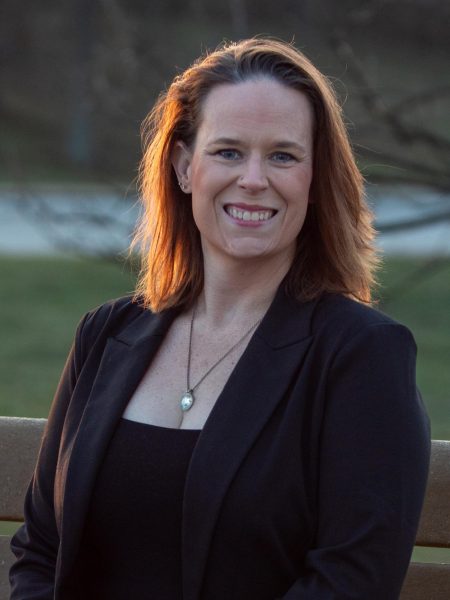
1: What encouraged you to run for the school board?
I’m a Francis Howell alum and a parent of two children in the district, so our schools are very personal to me. I decided to run because I want our district to be a place where teachers and staff feel supported enough to stay for years, where students feel safe and represented, and where the board works collaboratively with families, educators, and administrators.
2: What are some recent decisions by the Board that you would like to change or that you disagree with?
I would like to see the board return to a more collaborative and inclusive approach when making major decisions. One example: the 2024 board voted 5-2 to sunset the resolution against racism.
Bertrand, Cook, Ponder, Harmon, and Puszkar voted to sunset, Blair and Owens voting against the sunset. The community, teachers, staff, and especially students showed up to board meetings and told us how this action would negatively affect *everyone.* Had *all* of the 2024 board listened to those voices, more students, staff, teachers, and families today might feel a more inclusive atmosphere. Our community – teachers, students, staff, families, administrators – all have valuable perspectives, and when those voices are part of the conversation, the district makes stronger decisions.
3: How will you ensure greater fiscal responsibility in light of the Dominguez scandal?
Rebuilding trust starts with transparency and teamwork. Financial decisions shouldn’t happen in isolation—they should include input from educators and staff who understand how resources affect classrooms. Strong oversight, regular audits, and open conversations – with everyone – about district finances will help ensure that funding is used responsibly and in ways that benefit students.
4: Do you support the book challenges being made in the district? Also, what is your reaction to the current board’s change to the book challenge protocol?
Students benefit from access to a wide range of books and perspectives, and I trust trained educators and librarians to make responsible decisions about what belongs in our classrooms and libraries. They are professionals whose training includes selecting, reviewing, and maintaining collections that support student learning.
I also believe the current challenge policy is poorly structured and has created an unnecessary burden on the district. Before these changes, there was already a thoughtful review process in place, and parents have always had the ability to guide what materials their own children access. If elected, I would want to revisit the policy with educators and community members to determine whether it is truly serving students or simply diverting time and resources away from teaching and learning. Our teachers and librarians should be focused on supporting students, not navigating a complicated challenge process.
5: With Senate Bill 3 cutting down public school funding, how do you plan to improvise with our district’s budget?
Funding cuts make careful planning even more important. My priority would be protecting classroom resources and the staff who support students every day, while working with educators and the community to identify efficiencies. At the same time, our school boards must continue advocating at the state level for fair and adequate funding for public schools.
6: What are your top budgetary priorities and what would you cut if funding fell short?
My first priority is always the classroom—students, teachers, and the staff who directly support learning. If funding fell short, I would first look for operational efficiencies before considering anything that would reduce support for students or educators.
7: How do you plan to help lower-income students?
Every student deserves the opportunity to succeed regardless of their family’s financial situation. We can help by making sure students have access to tutoring, counseling services, and programs like free or reduced meals and after-school activities that keep them connected to school. I also support making sure students have the learning materials, 1:1 technology, and support services they need so that financial barriers don’t stand in the way of their education.
8: How do you plan to address the educational gap and income inequalities among students?
Addressing educational gaps requires listening to educators and using data to understand where students need additional support. Targeted academic programs, strong early learning opportunities, and access to resources can help ensure every student has the chance to succeed.
9: How do you make sure that all community members feel heard and trusted in the district?
Trust starts with listening. School board members should be accessible, attend community events, and create opportunities for students, families, teachers, and staff to share their perspectives. Transparent communication helps build confidence in the district’s leadership.
10: If you lost the election, what would you want the winner to prioritize?
I would want them to prioritize supporting and retaining our teachers and staff. High turnover makes it harder for students to build relationships and maintain stability in their education. Investing in the people who serve students every day should always be a top priority.
11: Why should students trust you to make decisions that affect them?
Students are the reason schools exist, so their voices matter. I believe school board members should listen to students, respect their experiences, and remember that every policy decision affects their daily lives and their future.
KEVIN MCGUIRE
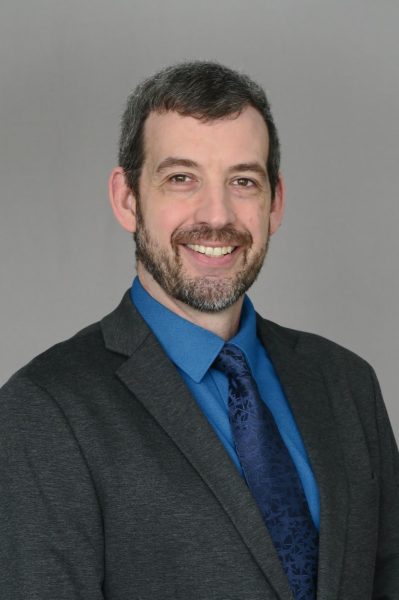
1: What encouraged you to run for the school board?
My kids are almost done with Francis Howell. They all had amazing opportunities and found their own success in school. Looking back I realize that was all made possible by the hard work of people I never met. Good things exist in our community because people stepped up and did the work. Now I have the chance do the work and give back to our schools. I believe have relevant experience and skills that I can utilize in this role while serving my community. Thru the board I can ensure opportunities exist for students just like my kids had.
2: What are some recent decisions by the Board that you would like to change or that you disagree with?
Like everyone else, I am angered by the superintendent payout, but without all the details its hard to know the right answer. A specific example I disagree with is the board update to policy 0340 back in December. The update allows the board to remove other board members from committees based on repeated disrespectful speech. I understand the intent, but I am concerned the wording is to vague. It could potential be applied incorrectly in the future. During board meetings or why acting in a board capacity, I accept some restrictions on a board member’s speech. However, on their own time, any board member should have the same freedom of speech as any other citizen. I would clarify policy 0340 if possible.
3: How will you ensure greater fiscal responsibility in light of the Dominguez scandal?
We all know we are better off without Dr. Dominguez, but we should learn from the failed process. The decision to hire him was rushed. Picking the leader of such a large district takes time. Now we know if he was properly vetted, he would have been eliminated from contention. I will ensure greater fiscal responsibility by not making rushed decisions just to satisfy a predetermined time frame. Also, If there is a justifiable reason to remove an employee, it shouldn’t cost tax payers. I believe the current board change employment contracts for district employees to have better termination clauses.
4: Do you support the book challenges being made in the district? Also, what is your reaction to the current board’s change to the book challenge protocol? Please explain your answers.
I support parent and community involvement, but the recent book challenges are excessive. Most of the challenged list was for for books in the high school, where student are transitioning to adulthood. To prepare them for life after graduation I expect mature age-appropriate topics. These challenged books help provide diverse perspectives and experiences. Those books should remain available to all students who want to expand their world view. I also respect the decisions of the media specialist in our libraries who are responsible for stocking our libraries and approved retaining them. In my personal experience, the list includes many classics I read in school. Regardless, parents can still control their student’s access. I respect those parents decisions for their child. Accommodating both side creates a balanced outcome in the end.
The change to the challenge protocol was a needed updated to a failing process. It was not set up for mass book challenges. The district didn’t have all the volunteers needed. It wasted money buying all the books for the committee. The artificial deadlines couldn’t be met. The updated process still allows for book challenges, but reduces waste and stress on the districts limited resources. And like every policy, it can be updated in the future if a better process is developed.
5: With Senate Bill 3 in action, cutting down public school funding, how do you plan to improvise with our district’s budget?
If Prop RT passes, we will face significant funding challenges. We are already the most efficient district in the county. We spend less per student. We have the highest district employee ratio. The impact of Prop RT will compound over time. Luckily the district finances are currently healthy and we could survive the first year or two while our reserves deplete. After that the district will have to ask the community to vote on returning the tax levy back to its current position. If they vote no, the only option will be significant cuts. I don’t want to cut opportunities for our student, which is why I oppose Prop RT. It removes local control of our district because a majority of voters do not live in Francis Howell. We should control our schools.
6: What are your top budgetary priorities and what would you cut if funding fell short?
My top budgetary priorities are class sizes and staff retention. Larger class sizes negatively impact student achievement. For Francis Howell to succeed we need to keep student teacher ratios as small as possible. For teachers to succeed they need support. To me staff retention applies beyond just certified positions. Any reduction of non-teaching positions puts more work on the teachers and distracts from classroom instruction. Retention is important, because attracting and replacing positions is expensive. I will focus on retention, to avoid that waste.
If funding fell short, the district does not have much buffer before cuts would be necessary. If there was significant existing waste, previous boards would have already eliminated it. So if cuts are necessary, they will hurt students somewhere. The board’s decision will need to be made with input from everyone. Without knowing the real amount being cut, I cant say what will be sacrificed. I would expect to involve staff, families, and students for input to help me make that decision. We will have to face it as a community.
7: How do you plan to help lower-income students?
I know that lower-income families face many challenges that make it hard to focus on education. Having highly trained counselors allows the district to help students and families. We have district staff that research grants and government programs that help families. Common efforts address food insecurity or affording vacation station. I can help by ensuring the board continues to support these efforts. I also want to foster inclusion of students beyond the classroom. For example, I know for the recent Henderson Eaglefest they considered the price of participation. The PTO made sure every student could attend, regardless of income. That type of support should apply to all activities in Francis Howell.
8: How do you plan to address the educational gap and income inequalities among students?
Francis Howell is a large district by size and population. With that size comes a diverse community spanning all income groups. We all know that income is an indicator of student achievement. My decisions will consider that fact. A Francis Howell education should have the same chance at success anywhere in the district. I want any opportunities available equally in all schools to all students. That begins with having every class appropriate size with a highly qualified teacher. From there, district decisions should consider the obstacles of low income students and find solutions that help everyone. For example, any student might have limited access to technology or transportation. The board’s proposed 1:1 technology plan creates opportunities to overcome that problem. We could implement virtual tutoring and activity participation for students who don’t have transportation, because now every student will have a computer. Small changes like that can improve outcomes for everyone.
9: How do you make sure that all community members feel heard and trusted in the district?
Making sure people feel heard takes work. Since I started the campaign I have been trying to reach everyone in the community. I joined social media. For people who know me, that was a big sacrifice. But that is where the community is, so that is where I need to be. I attempted attending every school’s PTO meeting. There I listened and learned about what is going on across the district. I’ve been to countless public events. I’ve knocked on hundreds of doors. All of this resulted in hundreds of conversations. This is the energy I will bring with me to my board tenure. Even after the election I will keep working to get community input.
10: If you lost the election, what would you want the winner to prioritize?
I want them to support all students and all families, not just the ones they agree with. I want them to make our schools welcome to everyone. I want them to listen to our teachers and staff. Mostly, I want them to fight for high quality public education and all the good it does.
11: Why should students trust you to make decisions that affect them?
I believe trust must be earned. So let me tell you what I’ve done that I believe has earned your trust. I have supported the district since my kids started kindergarten. I am in involved parent that attends every school activity I can. I volunteered for years with hundreds of hours helping students. I have helped raise significant donations for the schools. I’ve spoken up at board meetings over the years on important issues. In my campaign I have focused on student success as one my key priorities. You can review all my public statements. I have been consistent in my values, my words and my actions. Thru all this I feel I have started to earn trust. However, also I think leaders should always be accountable to those they serve. That’s why I showed up tonight to talk with you. If a leader ever says that can’t be questioned, you probably shouldn’t trust them.
DAVID JAWORSKI, JANE PUSZKAR, & LAUREN GREENWOOD (joint responses)

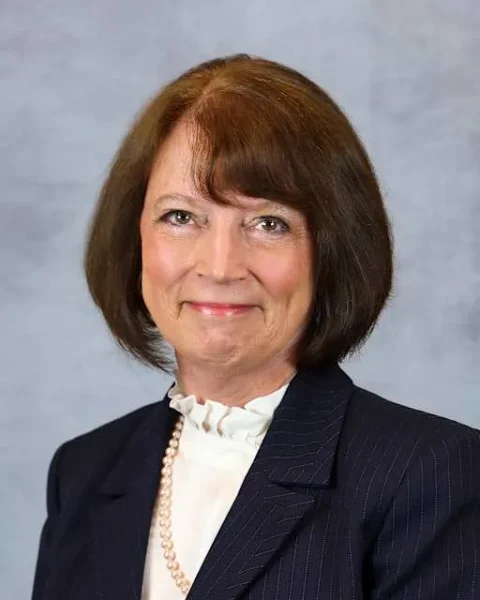
1: What encouraged you to run for the school board?
Children are the most important gifts to our society. We believe protecting them and educating them properly is our duty to the world in which we live and is a very satisfying task in life.
2: What are some recent decisions by the Board that you would like to change or that you disagree with?
- Hiring Michael Dominguez without proper background investigation.
- Not passing student safety policy that would prohibit boys in girls’ bathrooms and in girls’ locker rooms.
- Not removing age- age-inappropriate books containing anti-moral, sexually obscene, racially demeaning, and anti-cultural literature and curriculum.
- Making Policy 6341, Challenging Learning Commons Materials, very difficult for parents to remove age-inappropriate books containing anti-moral, sexually obscene, racially demeaning, and anti-cultural literature and curriculum.
- Not enforcing policy 6116, Human Sexuality.
3: How will you ensure greater fiscal responsibility in light of the Dominguez scandal?
- Require proper employee background investigation of any new hire.
- Employ professional hiring contract negotiator.
4: Do you support the book challenges being made in the district?
- Yes, I support all current FHSD policies.
- Also, what is your reaction to the current board’s change to the book challenge protocol?
- The revised Policy 6341, Challenging Learning Commons Materials, makes it very difficult for parents to remove age-inappropriate books. A review committee of 7 reviewers, allows 21 weeks to formulate a decision that the School Board can overrule at will.
5: With Senate Bill 3 in action, cutting down public school funding, how do you plan to improvise with our district’s budget?
- There is no definitive school funding impact by the County Assessor office at this time.
- The school district needs to prepare for any negative revenue impact by review all major spending budgets and programs in order understand what expenses should be protected and expenses that could be reduced without directly impacting the learning and safety of our children.
6: What are your top budgetary priorities and what would you cut if funding fell short?
- Top budget priorities include providing excellent student learning and providing a safe environment for all children.
- Programs not directly impacting learning and safety need to be identified by our school’s professional administration and teacher staffs.
7: How do you plan to help lower-income students?
By supporting Francis Howell School District programs that provide nutrition benefits, learning assistance and by listening to parents.
8: How do you plan to address the educational gap and income inequalities among students?
- By identifying and promoting where improvements can be made in our current curriculum programs to fill educational gaps.
- If I understand the question properly, Income inequality can apply to all students in different degrees. Local and state programs exist to help families with financial aid.
9: How do you make sure that all community members feel heard and trusted in the district?
Continue to encourage all community members to participate in our public meetings and ensure appropriate responses to their communications to the District.
10: If you lost the election, what would you want the winner to prioritize?
All of the above.
11: Why should students trust you to make decisions that affect them?
The same way they trust their elders to make decisions when they vote for school board representatives.